Whales are among the largest and most remarkable animals on Earth. These marine mammals live in oceans around the world, from warm tropical waters to the cold seas surrounding the poles.
Life Beneath the Surface
Although whales spend their lives in water, they breathe air through blowholes located on top of their heads. They must regularly return to the surface to breathe before diving again in search of food or traveling through the ocean.
Whales are warm-blooded, give birth to live young, and nurse their calves with milk. A thick layer of fat called blubber helps protect them from cold water and stores energy during long migrations.
Two Main Groups
Whales are generally divided into baleen whales and toothed whales. Baleen whales filter small animals from the water using flexible plates inside their mouths. This group includes blue whales, humpback whales, and gray whales.
Toothed whales use teeth to catch fish, squid, and other prey. Many of them also use echolocation, producing sounds and listening for returning echoes to understand their surroundings. Sperm whales, belugas, and orcas belong to this group.
The Blue Whale
The blue whale is the largest known animal to have ever lived. An adult can grow longer than a city bus and weigh well over one hundred tonnes. Despite its enormous size, it feeds mainly on tiny crustaceans called krill.
Communication and Migration
Whales communicate using clicks, whistles, pulses, and complex songs. Some sounds can travel across great distances underwater. Humpback whales are especially famous for their long, patterned songs.
Many species migrate thousands of kilometres each year. They often feed in cold, nutrient-rich waters before traveling to warmer regions where they mate and give birth.
Protecting Whales
Commercial hunting once caused severe declines in many whale populations. Today, whales also face threats from fishing gear, ship collisions, underwater noise, pollution, and changes to ocean ecosystems.
Conservation programs, safer fishing practices, protected habitats, and international cooperation can help whale populations recover. Protecting whales also supports healthier oceans because these animals play an important role in marine food webs and nutrient cycles.
You can train perfectly for six months and gain almost nothing if the kitchen is not doing its job. A muscle building diet for Indian beginners does not require chicken breast weighed on a scale or imported supplements – it requires enough protein, enough total food, and repeating that for months. This guide is built around what is actually available and affordable in Burari, Harit Vihar and Sant Nagar.
Training gives the signal. Food supplies the material. You need both.
The three numbers that matter
Protein: 1.6–2.0 g per kg of body weight per day. For a 70 kg person that is roughly 112–140 g. This is the single most important number and the one most beginners miss by half.
Calories: a small surplus of 200–300 above maintenance. Small. Eating 800 calories over does not build muscle faster, it just adds fat you will spend three months removing.
Training: 10–20 hard sets per muscle group per week. Food without the training stimulus is just food.
That is the entire framework. Everything below is just execution.
Cheap, high-protein food you can buy in any Burari market
Food
Typical serving
Approx. protein
Soya chunks (dry)
50 g
~26 g
Paneer
100 g
~18 g
Eggs
3 whole
~18 g
Chicken (cooked)
100 g
~27 g
Curd / dahi
200 g
~7 g
Milk (toned)
250 ml
~8 g
Dal / rajma / chana (cooked)
1 katori
~7–9 g
Roti (whole wheat)
2 medium
~6 g
Peanuts
50 g
~13 g
Figures are approximate and vary by brand and preparation, but they are close enough to plan with. Soya chunks are the standout – the cheapest protein per rupee available in almost every kirana in Sant Nagar.
A sample day at roughly 140 g of protein
Vegetarian version
Breakfast: 3 besan chillas + 250 ml milk + a banana – about 22 g
Mid-morning: 200 g curd + 30 g peanuts – about 15 g
Lunch: 2 rotis + 1 katori rajma + 100 g paneer sabzi + salad – about 33 g
Pre-workout: banana + 250 ml milk – about 8 g
Post-workout dinner: 50 g soya chunk curry + 2 rotis + rice + dal – about 40 g
Before bed: 250 ml milk – about 8 g
Non-vegetarian version
Breakfast: 4 eggs (2 whole, 2 whites) + 2 slices brown bread – about 26 g
Mid-morning: 200 g curd + fruit – about 8 g
Lunch: 150 g chicken curry + 2 rotis + dal + salad – about 50 g
Pre-workout: banana + black coffee
Post-workout dinner: 100 g fish or chicken + rice + sabzi – about 30 g
Before bed: 250 ml milk – about 8 g
Adjust the roti and rice quantity up or down to control total calories. Protein stays fixed; carbohydrates are the dial you turn.
Progressive overload in the gym is the signal; the diet is what answers it.
Five diet mistakes that quietly cost you muscle
Eating big but not eating protein. Four parathas is a lot of calories and almost no protein. You gain weight, not muscle.
Skipping breakfast, overloading dinner. Protein works better spread across three or four meals than dumped into one.
Treating the post-workout window as urgent. Total daily protein matters far more than the thirty minutes after training. Eat a proper meal within a couple of hours and stop worrying.
Cutting carbs while trying to grow. Carbohydrates fuel hard sets. Cutting them in a muscle-building phase makes every session worse.
Under-sleeping. Muscle is built during recovery. Five hours a night undoes a lot of good training and good food.
What about supplements?
Straight answer: you do not need them. Whey protein is a convenience – useful if your work makes it genuinely hard to eat enough protein, unnecessary if you can hit the target with food. Creatine monohydrate is the one supplement with a large and consistent evidence base behind it for strength and size, and it is inexpensive. Everything beyond those two is largely marketing.
Buy food first. A month of soya chunks, eggs and milk will outperform a month of fat burners every single time. And if you have any medical condition or take regular medication, check with your doctor before starting any supplement.
Progressive overload across months is what turns extra protein into extra muscle.
How fast should you expect to gain?
A beginner training consistently can expect roughly 0.5 to 1 kg of muscle per month in the first year, with the fastest progress in months three to six. That is real muscle, not scale weight – the scale will move faster because of water, glycogen and some fat.
Track waist alongside body weight. If body weight is climbing and waist is stable, the gain is mostly muscle. If both are climbing quickly, your surplus is too large – pull the extra rotis back a little.
Bulk or cut first?
If you are carrying a lot of extra fat, train hard and eat at maintenance or a slight deficit – beginners frequently gain muscle and lose fat simultaneously in the first six months. Our 90-day fat loss plan covers that route.
If you are already lean, go into a small surplus and start adding weight to the bar. The 30-day beginner strength plan is the right training foundation either way.
Build muscle at Arya Fitness Gym, Burari
A-53, Street No. 1, Harit Vihar, Sant Nagar, Burari, Delhi – 110084 Open 7 days | 5:00–11:00 AM & 4:00–10:00 PM
Our muscle building programme pairs a progressive training plan with practical diet guidance built around food you already eat – no imported ingredients, no unrealistic meal counts. Members get a written plan, a progress log and a review every four weeks, with personal training available for closer supervision.
About 1.6–2.0 g per kg of body weight per day. For a 70 kg person that is roughly 112–140 g, spread across three or four meals.
Can I build muscle on a vegetarian Indian diet?
Yes. Milk, curd, paneer, soya chunks, dal, rajma and chana will comfortably reach the target. Soya chunks and paneer are the highest-value additions for most vegetarian trainees.
Do I need whey protein?
No. It is a convenience, not a requirement. If you can hit your protein target from food, you do not need it.
How fast can a beginner gain muscle?
Roughly 0.5 to 1 kg of muscle per month in the first year, fastest in months three to six. Progress slows considerably after the first year.
Should I bulk or cut first?
Carrying extra fat? Lose some while training hard – beginners often do both at once. Already lean? Eat in a small surplus of 200–300 calories a day.
Where can I train for muscle building in Burari?
Arya Fitness Gym, A-53, Street No. 1, Harit Vihar, Sant Nagar, Burari, Delhi – 110084. Open seven days, 5:00–11:00 AM and 4:00–10:00 PM. Call 8585988301.
Hiring a personal trainer in Sant Nagar or Burari is one of those decisions people put off for months and then wish they had made on day one. Not because you cannot train alone – plenty of people do – but because the first two months of anyone’s training career decide the next ten years of it.
This guide covers what a personal trainer actually does, how pricing works in this part of Delhi, how many sessions you genuinely need, and the questions to ask before you commit to a package.
A trainer’s real value is correcting the rep you cannot see yourself doing.
What a personal trainer is actually for
There is a common assumption that a trainer is someone who counts your reps and shouts encouragement. The counting is the least valuable part. What you are actually paying for is:
Technique correction. You cannot see your own back angle on a deadlift. Bad patterns learned in month one take a year to unlearn.
A programme built for you. Your job, your injuries, your available days, your goal – not a template downloaded off the internet.
Load management. Knowing when to add weight and, more importantly, when not to. This is where most self-trained beginners either stall or get hurt.
Accountability. A booked session at 6 AM gets attended. A vague plan to “go to the gym sometime” does not.
Working around limitations. Knee pain, a desk-job shoulder, high blood pressure, a return after surgery – these need programme changes, not generic advice.
How personal training is priced in Burari and Sant Nagar
Rather than quoting a number that goes stale, here is how the pricing models work so you can compare fairly between gyms in the area.
Model
How it works
Best for
Per session
Pay for each session individually, highest rate per session
Trying a trainer out, occasional form checks
Monthly package
A fixed number of sessions per month at a reduced per-session rate
Beginners in their first two to three months
Semi-private / buddy
Two or three people share one trainer and split the cost
Friends or family with similar goals and timings
Programme only
A written plan reviewed every few weeks, without supervised sessions
Members who already train confidently
Two things drive the rate: the trainer’s experience and whether you are booking peak hours. Early morning and 7–9 PM are the busiest slots at every gym in Burari, so mid-morning or late-evening sessions are often easier to get and easier to negotiate. For current personal training rates at Arya Fitness Gym, call or WhatsApp 8585988301 – we quote live pricing rather than publish numbers that drift out of date.
Semi-private training splits the cost and keeps two people accountable to each other.
How many sessions do you actually need?
Fewer than most people assume, and fewer than most gyms will sell you. Honest answer:
Weeks 1–4: two to three sessions a week. This is where technique is built and it is worth the money.
Weeks 5–8: one to two a week. You know the movements; now you are learning to load them and to run your own session.
Month 3 onwards: one session a week, or one every fortnight, purely to review the programme and check form as the weights get heavier.
Later: a single session whenever your goal changes, you return from a break, or you pick up a niggle.
Anyone insisting you need three sessions a week indefinitely is selling, not coaching. A good trainer is working towards making you independent.
Eight questions to ask before you book a package
What certification do you hold, and is it current?
Have you trained clients with my specific goal – fat loss, post-injury, first-time lifter, over 50?
Will I get a written programme I can follow on the days you are not there?
How do you handle my existing knee, shoulder or back issue?
What is the session length, and does it include the warm-up?
What happens if I miss a session – can it be rescheduled or does it lapse?
Do you give diet guidance, and is it built around food I actually eat?
Can I do one trial session before buying the package?
The trial session is the important one. Thirty minutes on the floor tells you more about a trainer than any conversation at reception. Watch whether they ask about your history before prescribing anything – that single behaviour separates the good ones from the rest.
Red flags worth walking away from
Same programme for every client. If the plan was written before your first conversation, it was not written for you.
Pushing supplements hard in session one. Nutrition advice should start with your meals, not a tub.
Ignoring pain. “Push through it” is not coaching. A good trainer changes the exercise.
No progress record. If nobody is logging your weights, nobody knows whether you are improving.
Extreme diet prescriptions. Very low calorie plans, banned food lists and rapid-loss promises damage results and health. Anything involving a medical condition belongs with your doctor or a qualified dietitian.
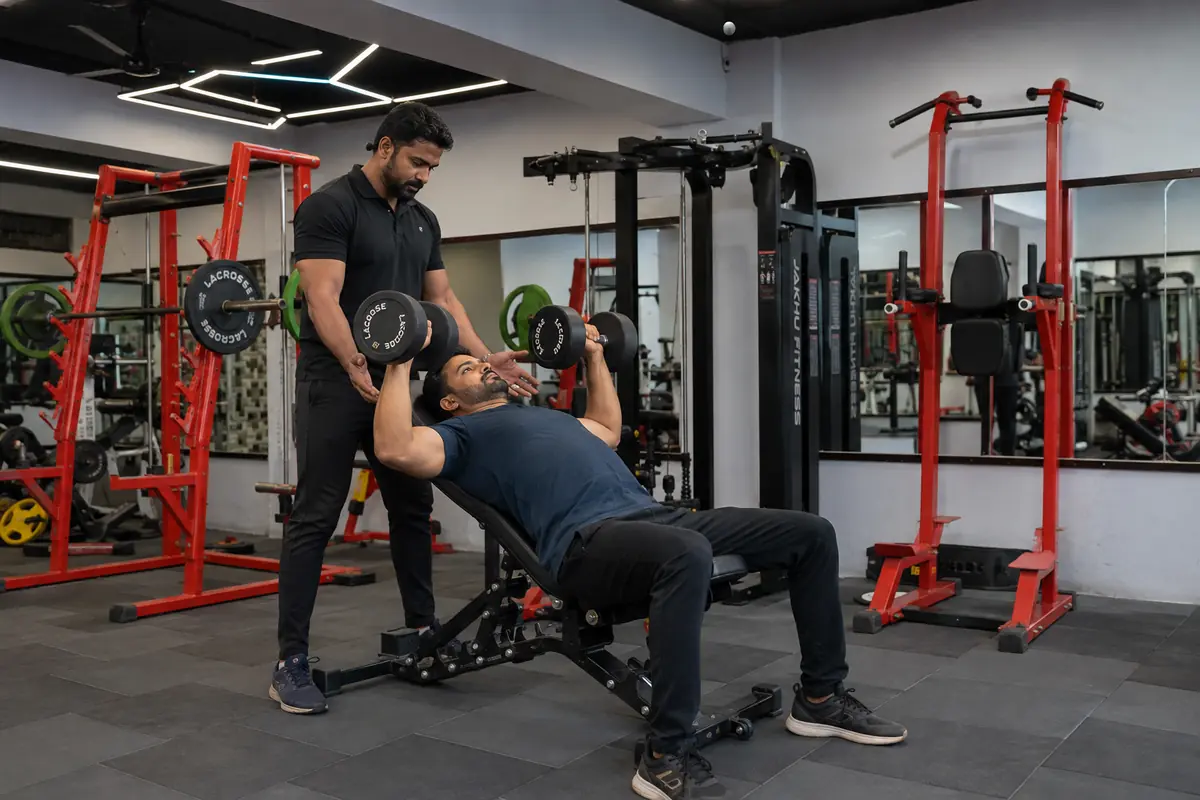
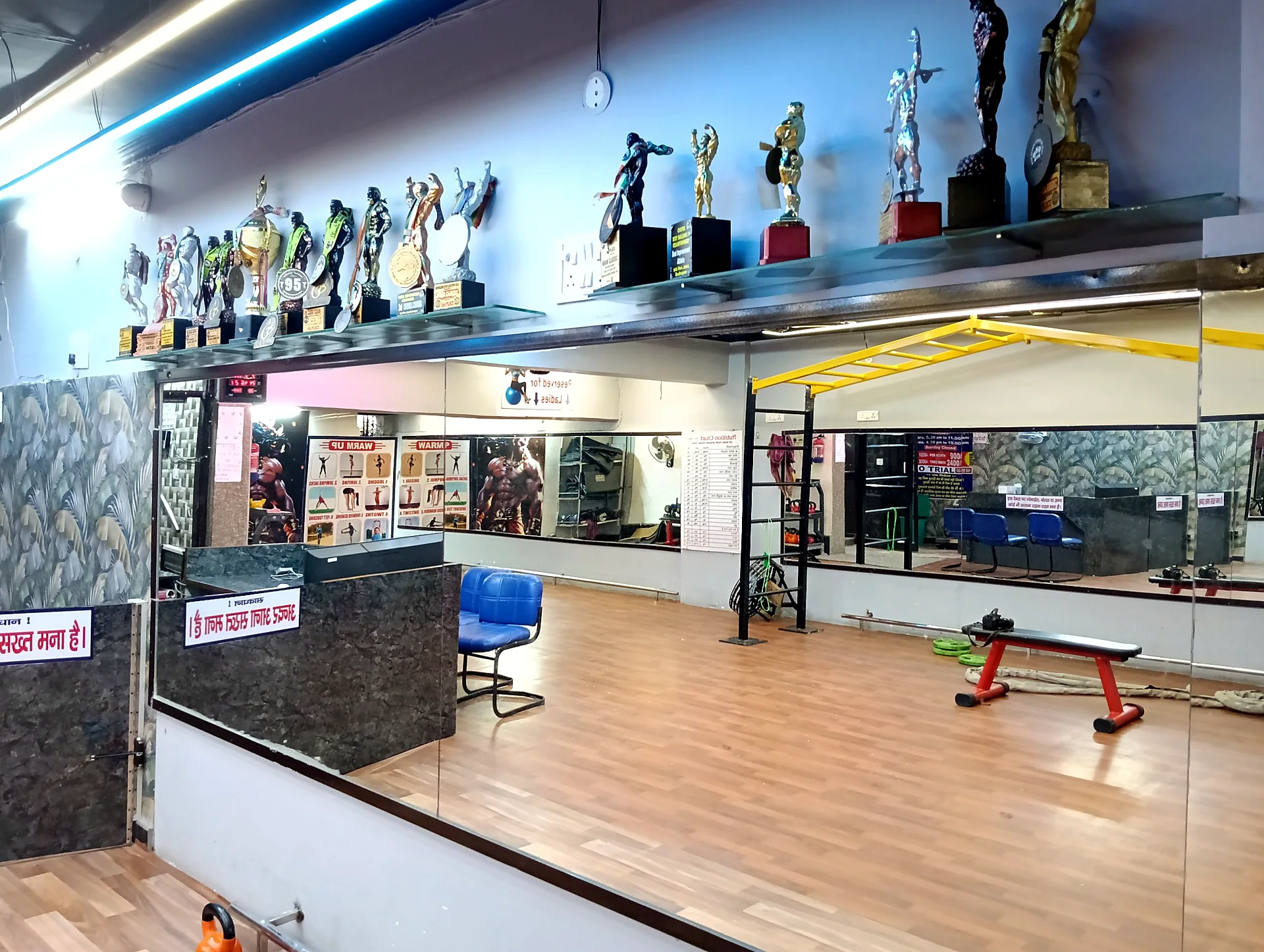
Mirrors, floor space and a trainer within reach – the basics of good supervised training.
When personal training is worth it – and when it is not
Worth it: you are a complete beginner; you are coming back after an injury, surgery or a long gap; you have trained for months with no visible progress; you have a deadline like a wedding or a physical fitness test; or you know from experience that you will not go unless someone is expecting you.
Probably not yet: you already train four days a week on a plan you follow properly and your numbers are still climbing. In that case put the money into a longer membership and keep doing what works.
Ask about personal training in Sant Nagar, Burari
Arya Fitness Gym | A-53, Street No. 1, Harit Vihar, Sant Nagar, Burari, Delhi – 110084 Open 7 days | 5:00–11:00 AM & 4:00–10:00 PM
Personal training at Arya Fitness Gym, Harit Vihar
Our trainers work on the floor, not at the desk. Sessions start with a goal conversation and a movement check, and every member gets a written plan for the days between sessions – whether the goal is fat loss, muscle building or strength.
How much does a personal trainer cost in Burari, Delhi?
Pricing is usually per session, as a monthly package of a fixed number of sessions, or as a shared semi-private rate. Packages work out considerably cheaper per session. Call 8585988301 for current rates at Arya Fitness Gym.
How many sessions do I need?
Most beginners need four to eight weeks at two or three sessions a week, then taper to one a week or move to a written programme with floor support.
Is personal training worth it for a beginner?
It is most valuable in the first two months, when your technique habits form, and when returning from injury or a long break.
What qualifications should a personal trainer have?
A recognised certification, current CPR or first aid training, experience with clients who share your goal, and the ability to explain why your programme is built the way it is.
Can I share a trainer with a friend?
Yes – semi-private training splits the cost between two or three people and works well when goals and timings match.
Do you offer personal training near Harit Vihar and Sant Nagar?
Yes. Arya Fitness Gym is at A-53, Street No. 1, Harit Vihar, Sant Nagar, Burari, Delhi – 110084, open 5:00–11:00 AM and 4:00–10:00 PM, seven days a week.
Strength training for beginners looks intimidating from the doorway. There are people moving serious weight, machines you have never used, and a strong suspicion that everyone is watching you. They are not – and thirty days from now you will be one of the people who looks like they know what they are doing.
This is the plan we hand to new members walking into our gym in Harit Vihar, Sant Nagar. It is designed for a complete beginner, needs three to four sessions a week, and takes about 50 minutes per session.
Month one is about learning the movements well – the heavy weight comes later.
Why strength training first, even if fat loss is the goal
Most beginners in Burari start on the treadmill because it feels safe. It is a reasonable start, but strength work is what changes the outcome, and here is why:
It keeps the muscle you already have while you are eating less, so the weight you lose is fat rather than muscle
Muscle is metabolically active – more of it means a higher daily calorie burn, all day, not just during the workout
It builds bone density, which matters enormously after your thirties
It fixes the posture problems that come from long hours sitting at a desk or on a bike
The progress is measurable. The bar either went up or it did not, and that feedback keeps people coming back
The five movements that make up 90% of good training
Forget the list of forty exercises. Every effective programme is built on five patterns. Learn these and you can train anywhere for life.
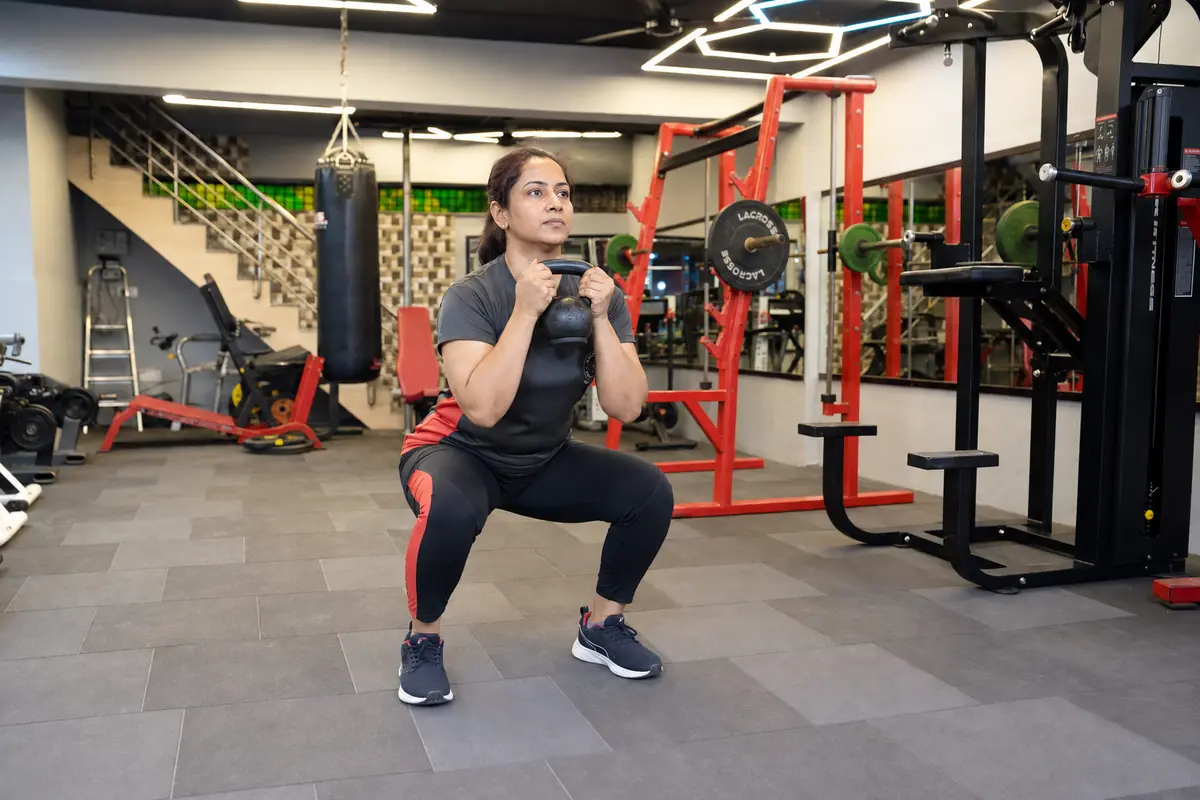
Squat – goblet squat, leg press, or bodyweight squat to a bench. Trains quads, glutes and core.
Hinge – Romanian deadlift, hip thrust or back extension. Trains hamstrings, glutes and lower back.
Pull – lat pulldown, seated row, or assisted pull-up. Back and biceps – the antidote to desk posture.
Carry and core – farmer walks, planks, dead bugs. Builds the trunk that protects your spine on everything else.
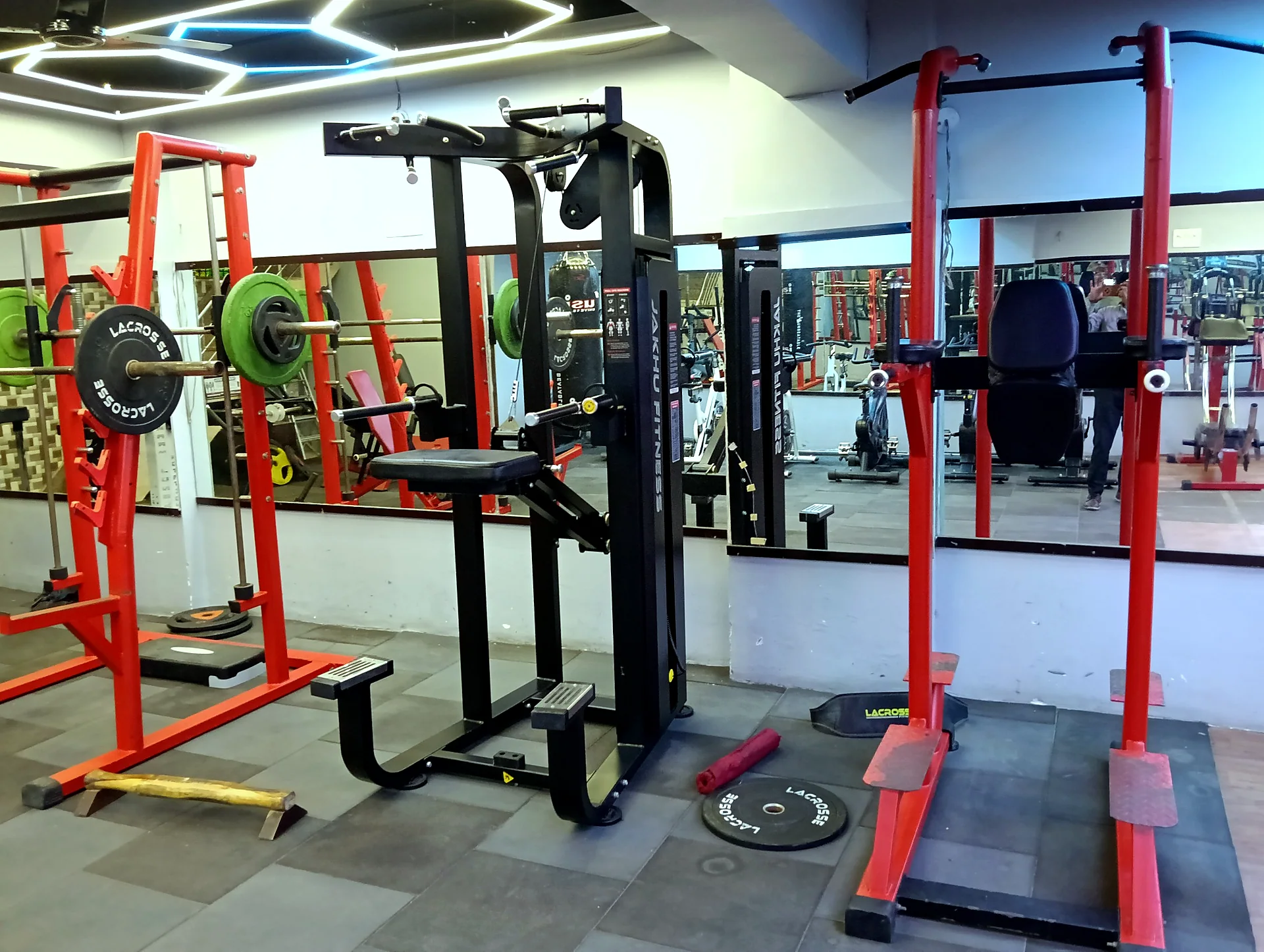
Machines are a good place to start – they let you build real working sets while you learn control.
Your first 30 days, week by week
Week 1 – learn the pattern, forget the weight
Three sessions, full body, every session identical. Two sets of each movement, 10–12 reps, at a weight that feels genuinely easy. Your only job this week is to finish every rep with clean form and leave the gym feeling like you could have done more.
Expect some soreness 24–48 hours after session one. It is normal, it fades, and it will be far milder after session three. Do not train through sharp or joint pain – that is a different signal entirely, and worth flagging to a trainer.
Week 2 – add a third set
Same three sessions, now three sets each. Add a small amount of weight only where all reps in week 1 felt controlled. This is where most beginners get impatient and jump 10 kg at once. Do not. Small, boring increases compound faster than heroic ones.
Week 3 – split the week
Move to four sessions: two upper body, two lower body. This lets you do more work per muscle group with better recovery. Rep range comes down to 8–10 on the main lifts, which means slightly heavier weight.
Week 4 – test and reset
Keep the four-day split and, on the last session of the week, note the weight you can handle for 8 clean reps on one push, one pull and one leg movement. That is your baseline. Month two is simply the job of making those three numbers go up.
A sample beginner week
Session
Exercises
Sets x Reps
Upper A
Chest press, seated row, shoulder press, lat pulldown, plank
3 x 8–10
Lower A
Goblet squat, leg press, Romanian deadlift, calf raise
3 x 8–10
Upper B
Incline press, cable row, lateral raise, biceps and triceps
3 x 10–12
Lower B
Hip thrust, split squat, leg curl, farmer carry
3 x 10–12
Warm up for five to eight minutes on a treadmill or cycle before every session, and finish with five minutes of stretching. Rest 90 seconds between sets on the main lifts, 60 on the rest.
Seven beginner mistakes we see on the floor every week
Ego loading. Half-rep sets with too much weight build nothing except a shoulder problem.
Changing the programme every week. You cannot progress on something you never repeat. Stick with a plan for at least four weeks.
Skipping legs. The largest muscles in your body, and the ones that most influence how you look and move.
No log. If you are not writing down weight and reps, you are guessing. A note on your phone is enough.
Training every day in week one. Muscle is built during recovery, not during the session.
Ignoring protein. Training hard on 35 g of protein a day means you are doing the work and not collecting the result.
Chasing soreness. Soreness measures novelty, not progress. The logbook measures progress.
Free weights build the coordination and stability that machines alone cannot.
What to eat around your training
Nothing complicated. Aim for 1.4–1.8 g of protein per kg of body weight spread across the day – dal, curd, paneer, eggs, soya, chicken or fish. Eat a normal meal one to two hours before training, drink water through the session, and keep carbohydrates in your diet. Cutting carbs while learning to lift makes every session harder for no benefit.
Strength moves first. Within two to three weeks the same weight feels lighter, mostly because your nervous system has got more efficient at the movement. Visible changes in shape take longer – eight to twelve weeks of consistent training with enough protein. Photos every month tell you far more than the mirror does.
Start strength training in Harit Vihar, Burari
Arya Fitness Gym | A-53, Street No. 1, Harit Vihar, Sant Nagar, Burari, Delhi – 110084 Open 7 days | 5:00–11:00 AM & 4:00–10:00 PM
Our strength training programme starts exactly where this article does: five patterns, a written plan, and a trainer on the floor while you learn them. The gym has a full free-weight section, kettlebells, plate-loaded and selectorised machines, and open space for carries and mobility work – see the facilities or the gallery.
How long before I see results from strength training?
Strength improves in two to three weeks. Visible changes in shape usually take eight to twelve weeks of consistent training and adequate protein.
Machines or free weights for beginners?
Both. Machines let you build real working sets safely in week one; free weights build coordination and stability. A good beginner plan uses machines for volume and free weights for the main patterns.
Will strength training make women bulky?
No. Significant muscle gain takes years of dedicated training and a calorie surplus. For most women the result is a firmer, leaner shape with stronger bones and better posture.
How much weight should I start with?
A load you can lift for 10–12 controlled reps with two or three reps still left in you. If form breaks before the last rep, it is too heavy.
Do I need to feel sore to know it worked?
No. Soreness reflects unfamiliar work, not effective work. Judge the session by whether your numbers are trending up over the weeks.
Is there a strength training gym near Sant Nagar?
Arya Fitness Gym, A-53, Street No. 1, Harit Vihar, Sant Nagar, Burari, Delhi – 110084. Open seven days, 5:00–11:00 AM and 4:00–10:00 PM. Call 8585988301.
Most people looking for a weight loss gym in Burari have already tried something – a month of morning walks, a crash diet in April, a gym membership that lapsed in six weeks. The problem is almost never effort. It is that the plan was built for someone with a different job, a different kitchen and a different commute.
This is a realistic 90-day fat loss plan written for people training in Harit Vihar, Sant Nagar and the wider Burari area. It assumes you eat Indian food, you have limited time, and you want the weight to stay off after day 90.
Fat loss is built on training you can repeat, not training you can barely survive.
First, a realistic target
A sustainable rate of fat loss is roughly 0.5 to 0.75 kg per week. Over 90 days that is about 6 to 9 kg for most people, and closer to 10–12 kg if you are starting from a higher body weight. That number is not exciting on a poster, but it is the number that actually holds.
Anything faster generally means you are losing muscle and water alongside fat. You end up lighter but softer, with a lower metabolism and a body that regains weight quickly the moment you eat normally again. If a plan promises 10 kg in 30 days, it is selling you the rebound.
Why fat loss stalls for most people in Delhi
Liquid and hidden calories. Two sugary chais, a soft drink and a packet of namkeen can quietly add 500–600 calories a day without registering as “food”.
Cooking oil. A tablespoon is around 120 calories. Most home kitchens use three to four times more than they think per dish.
Not enough protein. A typical roti-sabzi-rice day can land under 40 g of protein. In a calorie deficit that means you lose muscle along with fat.
Cardio-only training. An hour on the treadmill burns calories once. Keeping muscle raises what you burn every hour of every day.
All-or-nothing thinking. One heavy Sunday meal does not undo a week. Quitting on Monday because of it does.
The 90-day plan, in three phases
Each phase is 30 days. The training gets harder as your capacity improves, and the diet changes very little – because the diet was never meant to be dramatic.
Phase 1 (Days 1–30): build the habit
Goal this month is attendance, not intensity. Four gym sessions a week, every week, no exceptions. Two full-body strength training sessions and two sessions combining strength with 20 minutes of steady cardio.
Learn the five basic patterns: squat, hinge, push, pull, carry
Two to three sets per exercise, stopping two reps short of failure
20 minutes of steady treadmill or cycle work after weights, at a pace where you can still talk
6,000–8,000 steps a day outside the gym
Protein at every meal – dal, curd, paneer, eggs, chicken, soya
Do not weigh yourself daily this month. Track attendance instead. Sixteen sessions in thirty days is the win.
Cardio is added on top of strength work, not used as a replacement for it.
Phase 2 (Days 31–60): add the deficit properly
Now the food side gets deliberate. Not starvation – structure.
Fix a rough portion standard: one plate, half vegetables, a quarter protein, a quarter roti or rice
Cut cooking oil to one to one-and-a-half tablespoons per person per day
Replace sugary chai and cold drinks with unsweetened versions or water – this alone is often 300+ calories
Keep 1.4–1.6 g of protein per kg of body weight
Four gym sessions: two upper body, two lower body, with cardio moved to 25–30 minutes
8,000–10,000 steps daily
Weigh yourself once a week, same day, same time, before breakfast. Judge by the weekly average, not any single reading – salt, sleep and stress move the scale by a kilo either way with no relation to fat.
Phase 3 (Days 61–90): push output, protect muscle
By now you are stronger and fitter, so training density goes up. Shorter rests, more work in the same hour, and you keep adding weight to the bar where you can – that is what tells your body to hold onto muscle while fat comes off.
Four to five sessions a week, mixing resistance work with 10–15 minutes of interval cardio on two days
Rest periods trimmed to 60–75 seconds on accessory work
Keep protein high even as total calories drop
10,000 steps daily – this is the quiet engine of the whole plan
7–8 hours of sleep; poor sleep reliably increases appetite and slows progress
A sample training week you can actually follow
Day
Focus
Time
Monday
Lower body strength + 20 min cardio
60 min
Tuesday
Upper body push and pull
50 min
Wednesday
Walk 45 minutes, mobility work
45 min
Thursday
Full body strength + intervals
60 min
Friday
Upper body + core
50 min
Saturday
Cycling or conditioning circuit
40 min
Sunday
Rest – walk only
–
Cycling is a joint-friendly option on days when the knees have had enough treadmill.
What to eat – without abandoning Indian food
You do not need to give up roti, rice or aloo. Total calories decide fat loss; no single food does. What changes is the shape of the plate.
Protein first. Eggs, curd, paneer, dal, soya, chicken or fish at every main meal.
Vegetables next. Half the plate, cooked in minimal oil.
Carbs last, portioned. Two to three rotis or a fixed katori of rice – measured, not eyeballed.
Drink your calories deliberately. Water, black or unsweetened chai, buttermilk. Not soft drinks or packaged juice.
One relaxed meal a week. Planned, enjoyed, no guilt. This is what keeps the other twenty meals compliant.
If you have a medical condition such as diabetes, thyroid disorder or PCOS, or you are on regular medication, talk to your doctor before starting a calorie deficit. A good plan works around your health, not against it.
Track these four things, ignore everything else
Weekly average body weight
Waist measurement at the navel, once a fortnight
Gym attendance – sessions completed per week
Strength on two lifts, e.g. squat and row – if these go up while weight goes down, you are losing fat, not muscle
Progress photos every 30 days beat the mirror. You do not notice a change you see every day.
Start your fat-loss programme in Harit Vihar
Arya Fitness Gym | A-53, Street No. 1, Harit Vihar, Sant Nagar, Burari, Delhi – 110084 Open 7 days | 5:00–11:00 AM & 4:00–10:00 PM
Our weight loss programme runs on exactly this structure: strength as the base, cardio as the multiplier, and a plan you review every four weeks. The floor has treadmills, indoor cycles, a full free-weight and machine section and open space for conditioning – see the facilities for the full list.
How much weight can I realistically lose in 90 days?
Around 6 to 9 kg for most people, more if you are starting from a higher body weight. That is roughly 0.5–0.75 kg a week, which is the rate that actually stays off.
Cardio or weights for weight loss?
Both, weights first. Resistance training protects the muscle you have while you are eating less, which keeps your daily calorie burn higher. Cardio is added on top to increase total output.
Do I have to stop eating roti and rice?
No. Control the portion, cut the cooking oil and sugary drinks, and add protein to every meal. Most people in Delhi get better long-term results keeping their normal food than cutting it out entirely.
How many days a week should I train?
Four is the sweet spot for a beginner in a 90-day block, plus daily walking. Three works if your schedule is tight. More than five rarely adds much at this stage.
Is there a weight loss gym near Sant Nagar and Harit Vihar?
Arya Fitness Gym is at A-53, Street No. 1, Harit Vihar, Sant Nagar, Burari, Delhi – 110084, open seven days a week, 5:00–11:00 AM and 4:00–10:00 PM. Call or WhatsApp 8585988301.
If you have been searching for the best gym in Burari, you have probably noticed the same thing everyone in Harit Vihar and Sant Nagar notices: there is no shortage of options, but there is a big difference between a gym that has machines and a gym that actually gets you results. This guide is written for people living in and around Burari, Delhi – 110084, and it walks you through the nine things worth checking before you hand over a single rupee.
We run Arya Fitness Gym on Street No. 1 in Harit Vihar, so yes, we have a stake in this. But the checklist below works whichever gym you finally pick. Use it, visit two or three places, and join the one that ticks the most boxes.
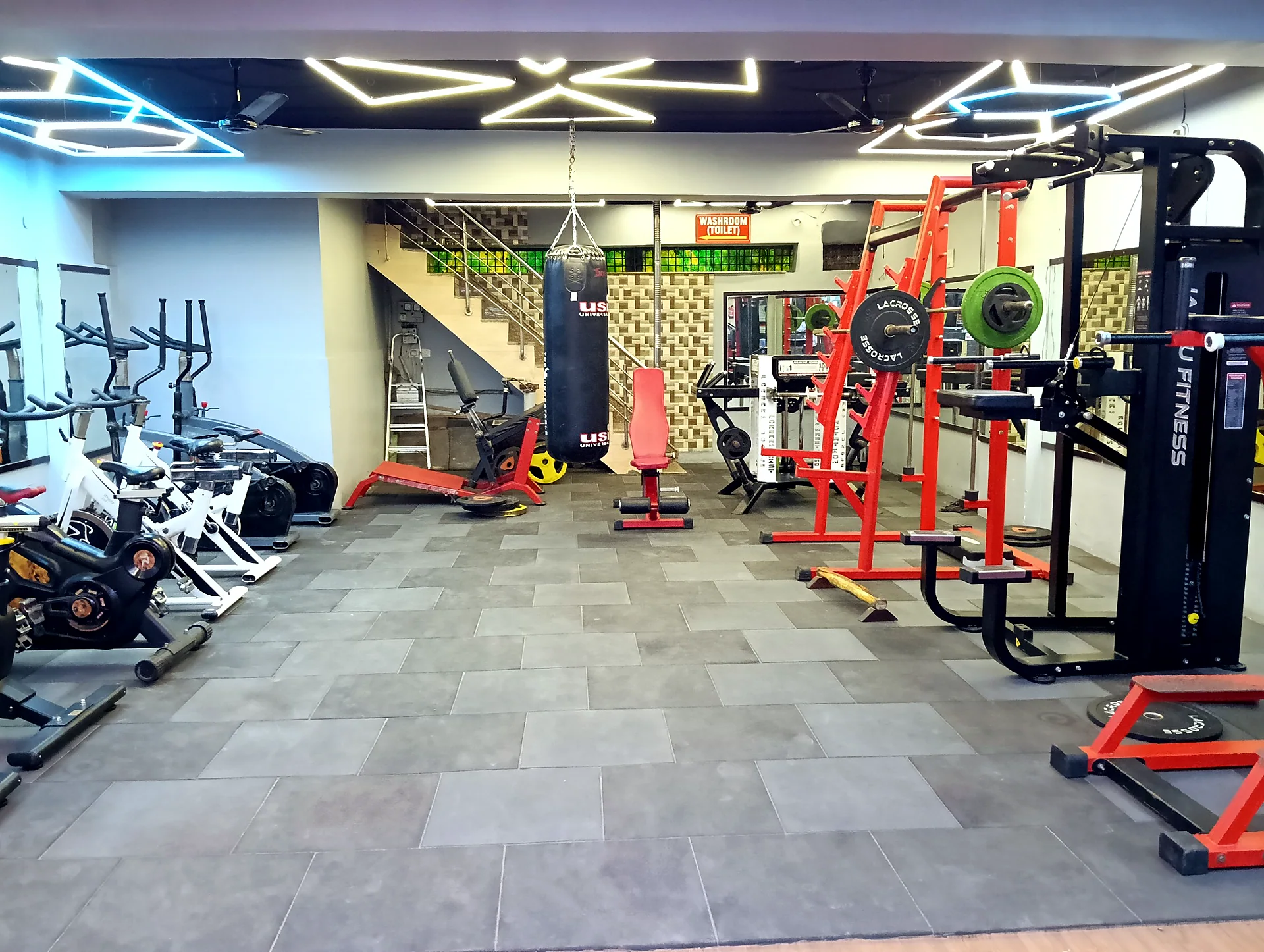
Floor space and layout matter more than the number of machines on the brochure.
Why choosing a gym in Burari is a slightly different problem
Burari is not South Delhi. Most of us are not driving 25 minutes to a chain gym with a juice bar. What we need is something closer to the opposite: a gym within walking or five-minute-scooter distance, open at hours that fit a Delhi commute, with equipment that survives heavy daily use and a trainer who actually knows your name.
That changes what “best” means. The best gym in Burari is not the one with the fanciest reception. It is the one you will still be walking into on a cold January morning in your eleventh month of membership. Consistency beats everything, and proximity is the single biggest driver of consistency.
The 9-point checklist before you join a gym in Harit Vihar or Sant Nagar
1. Apply the ten-minute rule
Time the journey from your door to the gym floor. If it is under ten minutes, you will go on the days you do not feel like going – and those are the days that build the habit. Anything over twenty minutes and your attendance will quietly collapse by week six. For residents of Harit Vihar, Sant Nagar, Kamal Pur, Nathupura and Ibrahimpur, a gym on or near Main Canal Road is usually well inside that window.
2. Check the timings against your actual life, not your ideal life
A gym that opens at 6:30 AM is useless if you leave for work at 6:45. Arya Fitness Gym runs 5:00–11:00 AM and 4:00–10:00 PM, seven days a week, which is deliberately split to cover early risers, the late-morning crowd, and everyone coming back into Burari after office hours. Ask any gym you visit for their weekend and holiday timings too – that is where many local gyms quietly cut back.
3. Look at the equipment mix, not the equipment count
Twelve treadmills and four dumbbells is not a gym, it is a cardio room. A gym that can take you from beginner to genuinely strong needs all four of these:
A free-weight section with dumbbells going up in useful increments, barbells and benches
Plate-loaded or selectorised machines for the movements you cannot yet load safely
A cardio zone – treadmills, cycles or cross trainers – for conditioning and fat loss
Open floor space for functional work, mobility, stretching and warm-ups
Walk the floor and check the condition of what you see. Frayed cables, missing dumbbells in the middle of a rack and treadmills with an “out of order” sign tell you exactly how the place is run. You can see our full gym facilities and browse the gym gallery before visiting.
A complete floor covers free weights, machines, cardio and open functional space.
4. Visit at the hour you actually plan to train
This is the tip most people skip and later regret. A gym in Sant Nagar can look empty at 2 PM and be shoulder-to-shoulder at 7 PM. Go once at your intended training time. If you would have to wait ten minutes for a bench, that is forty wasted minutes a week and a workout you will start skipping.
5. Watch how the trainers behave on the floor
Stand quietly for five minutes and observe. Are the trainers correcting form, counting reps, spotting a heavy set? Or are they on their phones near the reception? You are not paying for the equipment – you can buy dumbbells. You are paying for coaching, safety and accountability.
6. Ask what happens in your first two weeks
A serious gym has an answer ready. Ours looks like this: a goal conversation, a basic movement check, then a written programme you can follow from day one, whether your goal is weight loss, muscle building or strength training. If the answer is “bhaiya machine dikha denge”, keep looking.
7. Hygiene, ventilation and safety
Delhi summers are brutal and a badly ventilated gym in Burari becomes genuinely unsafe in May and June. Check airflow, fans or AC, the state of the washrooms, whether mats and benches get wiped, and whether there is drinking water on site. Check that heavy racks are stable and plates are stored properly, not left on the floor for someone to trip over.
8. Insist on transparent membership terms
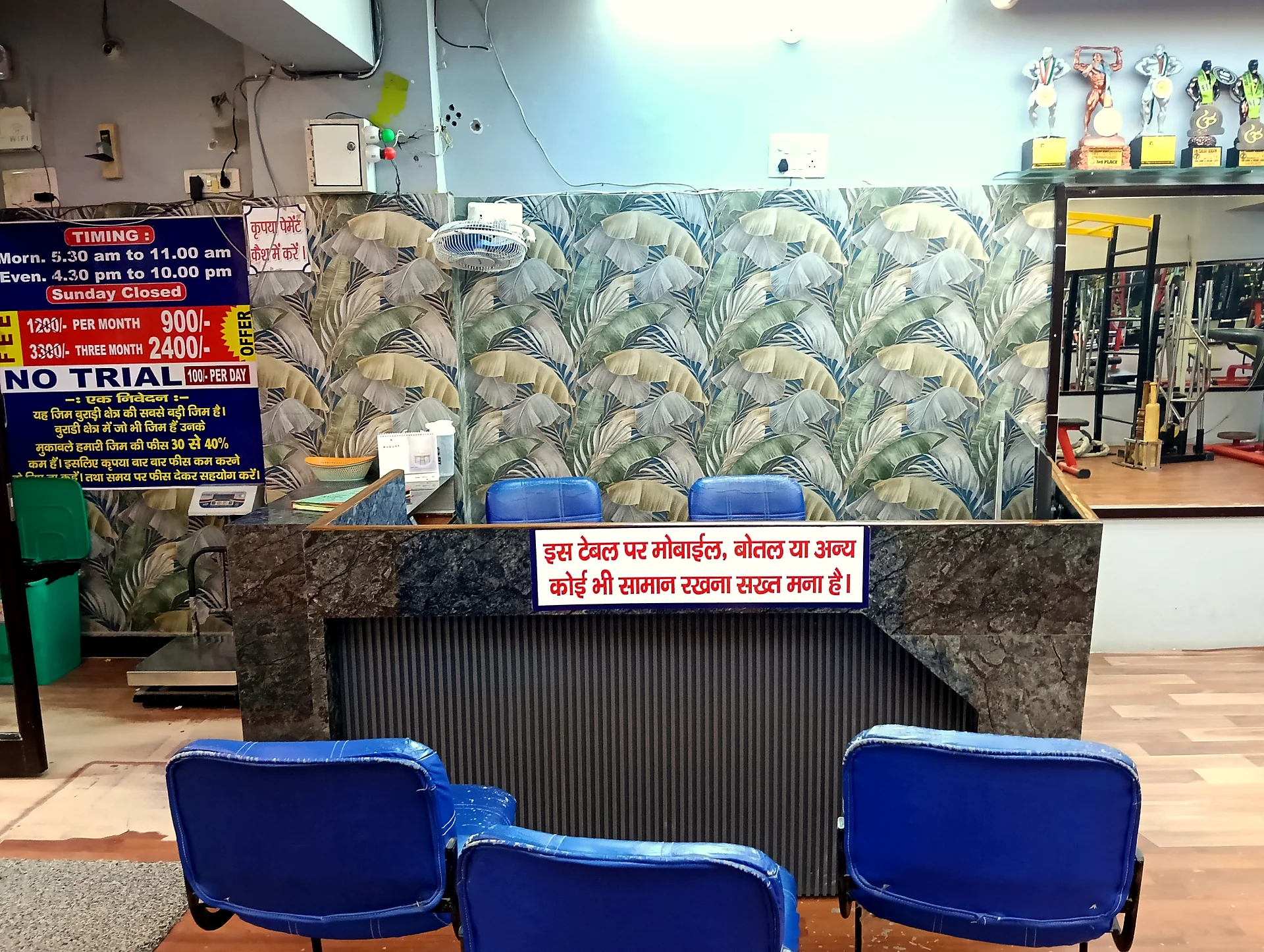
Ask four questions and note the answers: what is the monthly rate, what is the quarterly and yearly rate, is there a joining or registration fee, and what happens if you need to freeze your membership for a month. Longer plans should cost meaningfully less per month – that is the whole point of them. Our membership plans page lists the plan structure, and current pricing is shared over call or WhatsApp so you always get the live offer rather than an outdated number.
9. Ask for real, local results
Not stock photos. Ask to see or speak to members from your own area who have trained there for six months or more. A gym embedded in the Burari community will have plenty. Our member reviews come from people living in Harit Vihar, Sant Nagar and the surrounding colonies.
Ask your questions at reception before you sign – a good gym answers all of them plainly.
A quick scoring sheet you can carry on your gym visits
Score each gym you visit out of 2 on every point. Anything above 14 out of 18 is a strong local option.
What to check
Green flag
Red flag
Travel time
Under 10 minutes door to floor
You need to plan the trip
Timings
Early morning + evening, 7 days
Shorter hours on Sunday
Equipment
Free weights, machines, cardio, open floor
Mostly cardio, thin dumbbell rack
Peak-hour crowd
You can start within 2 minutes
Queues for benches and racks
Trainers
On the floor, correcting form
At reception, on the phone
Programme
Written plan from day one
“Do whatever you like”
Hygiene
Ventilated, clean washrooms, water
Stale air, plates on the floor
Pricing
All plans and fees stated upfront
Vague answers, pressure to sign
Results
Long-term local members to speak to
Only stock photos
What a good first visit to a gym in Burari looks like
Walk in during your intended training hour, not at a quiet time.
Ask for a floor tour and watch the trainers while you take it.
Ask the first-two-weeks question and listen for a specific answer.
Ask for the full plan list including any joining fee and freeze policy.
Ask if you can do one trial session before committing to a plan.
Any gym confident in what it delivers will say yes to a trial. If a place refuses to let you try the floor before paying for three months, that tells you something.
Where Arya Fitness Gym fits in
We are a neighbourhood gym in Harit Vihar, Sant Nagar, Burari – not a chain, not a franchise. The floor covers strength machines, a full free-weight and kettlebell zone, treadmills and indoor cycles, a boxing area, and open space for functional training. Programmes are built around four goals: fat loss, muscle building, strength, and general fitness, with personal training available if you want closer supervision.
More about our approach on the about page, or come see the floor yourself – that is genuinely the fastest way to decide.
Train at Arya Fitness Gym, Harit Vihar
A-53, Street No. 1, Harit Vihar, Sant Nagar, Burari, Delhi – 110084 Open 7 days | 5:00–11:00 AM & 4:00–10:00 PM
The one closest to your home that has a trainer on the floor during your usual hours, a full free-weight and machine section, and a written beginner programme. Proximity is the underrated factor – a slightly smaller gym you visit five times a week beats a bigger one you visit twice.
What are the gym timings in Harit Vihar, Burari?
Arya Fitness Gym is open seven days a week, 5:00–11:00 AM and 4:00–10:00 PM. The split covers early-morning trainees, the late-morning crowd and office-goers returning to Burari in the evening.
How much does a gym membership cost in Burari, Delhi?
Local gyms in Burari and Sant Nagar typically offer monthly, quarterly, half-yearly and yearly plans, with the longer plans working out cheaper per month. Call or WhatsApp 8585988301 for current pricing and running offers.
Is there a ladies-friendly gym near Sant Nagar?
Ask about quieter slots – late morning and early evening are usually the least crowded hours. Visit once at the hour you plan to train so you can judge the floor and the crowd for yourself before joining.
Do I really need a personal trainer?
Not forever. Four to eight weeks is usually enough to learn the squat, hinge, press and row patterns safely. After that most members continue on a written programme with floor support from the gym trainers.
How far is the gym from Kamal Pur, Nathupura and Ibrahimpur?
All of them are a short ride from Street No. 1, Harit Vihar. Most members from the surrounding Burari colonies reach the floor in under ten minutes.